

































Government Ban on Food Advertising is Miguided, Says Consumer Group

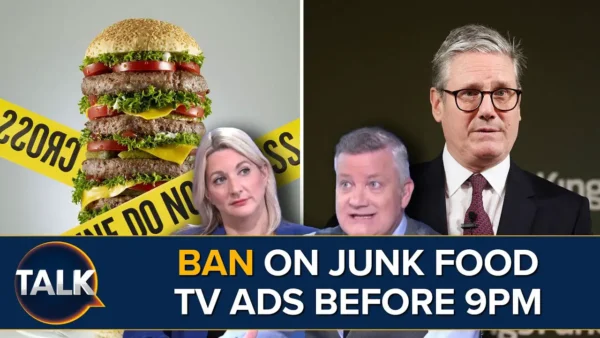
The Consumer Choice Center (CCC), the global consumer advocacy group, strongly opposes the UK government’s ban on junk food advertising on television before 9 pm and across online platforms, which has come into force as part of the government’s childhood obesity strategy. While obesity and public health are important issues, this new regulation represents an overreach that limits personal freedom, stifles consumer choice, and unfairly targets lawful speech and advertising.
“This ban is a classic example of nanny-state paternalism that treats adults and parents as incapable of making informed decisions for themselves and their families.” Says Mike Salem, UK Country Associate for the CCC.
Mike further comments, “Rather than empowering consumers with information and expanding access to healthier options, the government is choosing to restrict how companies communicate with the public, a move that undermines both free expression and competitive markets.”
The CCC believes that:
- Advertising restrictions do not address the root causes of obesity. Marketing serves to inform consumers of available products; restricting it will not fundamentally change lifestyles, dietary habits, or the complex socio-economic factors that contribute to poor health.
- The ban sets a dangerous precedent for regulating legal products. Today’s policy could easily be extended in future to cover alcoholic beverages, gambling, or other products that adults choose to consume responsibly.
- Consumers and families should be trusted, not treated as wards of the state. Parents, not bureaucrats, are best placed to decide what products their children should see or consume.
- Innovation and competition suffer when speech is curtailed. Small and medium enterprises rely heavily on advertising to reach consumers, especially online, and are disproportionately harmed compared with larger incumbents.
The CCC also notes that prior critiques of similar regulatory proposals described them as overly complex and difficult to enforce, particularly online, where marketing channels are fragmented and global in scope. Attempts to ban certain forms of advertising have historically faced challenges adapting to new media such as social platforms and influencer content.
Mike Salem concluded by recommending: “Instead of blanket bans that penalise consumers and burden businesses, the government should focus on policies that expand access to education, empower healthier choices, and reduce barriers to affordable food choice.”


“Public health goals should be pursued without eroding core freedoms in a free and open society. This ban will hurt a good number of the 5.5 million small businesses who rely heavily on digital advertising to reach customers. Blanket online ad bans disproportionately harm smaller firms while entrenching larger incumbents.”