

































How China’s Social Commerce Model Is Reshaping Global Marketing

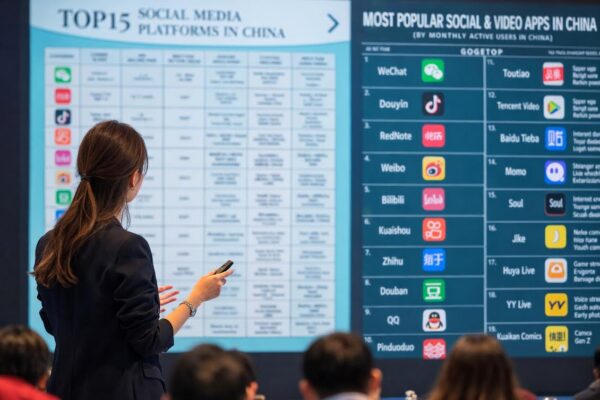
Over the past decade, China has developed one of the world’s most influential digital marketing ecosystems. Increasingly, global brands and marketers are studying the country’s social commerce model, where social media, influencer content and online shopping are deeply integrated into a single consumer experience.

Unlike traditional e-commerce markets where consumers typically search for products through search engines or retail platforms, Chinese consumers frequently discover products through social media content, community recommendations and livestream events.
The scale of this digital economy is substantial. According to the China Internet Network Information Center (CNNIC), China had 1.09 billion internet users in 2024, representing one of the largest connected consumer populations globally. Meanwhile, research from Statista estimates that China’s social commerce market exceeded $450 billion in 2023, accounting for more than half of global social commerce transactions.
“China has effectively merged entertainment, community engagement and commerce into a single digital ecosystem,” said Jone Smiths, Digital Marketing Manager at Gogetop Marketing. “Consumers often discover a product through content first, rather than through direct search.”

From Content Discovery to Instant Purchase
China’s digital platforms allow users to move seamlessly from content consumption to product purchasing. Platforms such as Douyin, RedNote (Xiaohongshu) and WeChat Channels enable users to purchase products directly through short videos, influencer posts or livestream broadcasts.
According to research from iiMedia, China’s livestream e-commerce market reached approximately 4.9 trillion yuan (£540 billion) in gross merchandise value in 2023, illustrating how video-driven marketing has become central to online retail.


“Short-form video and livestream content are now among the most powerful sales channels in China,” Smiths explained. “Brands that understand how storytelling works on these platforms often see significantly stronger engagement.”
The Rise of China’s Influencer Economy
At the centre of China’s social commerce ecosystem is the rapid expansion of the KOL (Key Opinion Leader) economy. Influencers on platforms such as Douyin and RedNote frequently act as product reviewers, lifestyle creators and sales hosts simultaneously. Some livestream sessions attract millions of viewers and generate substantial product sales within hours.
Research cited by McKinsey suggests Chinese consumers are significantly more likely to purchase products based on influencer recommendations compared with many Western markets.
“Influencers in China are not simply promoting products,” Smiths said. “They are operating as trusted intermediaries between brands and consumers.”
RedNote and the Discovery-Driven Marketing Model
One platform that has gained particular attention among international marketers is RedNote (Xiaohongshu), a social discovery platform combining lifestyle content with product recommendations.
According to analytics firm QianGua Data, RedNote now attracts more than 300 million monthly active users, many of whom are younger urban consumers with strong purchasing power.
Rather than relying heavily on traditional advertising, brands on RedNote typically focus on user-generated content, peer reviews and authentic storytelling to build trust.
A Marketing Model Increasingly Studied Worldwide
As social commerce continues to expand, analysts say China’s platform-driven marketing ecosystem is increasingly influencing global digital strategies.
Many international platforms—including TikTok, Instagram and YouTube—have introduced integrated shopping features inspired by China’s model.
“China’s digital platforms demonstrated that content, community and commerce can operate within the same environment,” Smiths said. “For brands around the world, that insight is reshaping the future of digital marketing.”