































Disabled Young People Failed by Arts Sector, Youth Music Reports

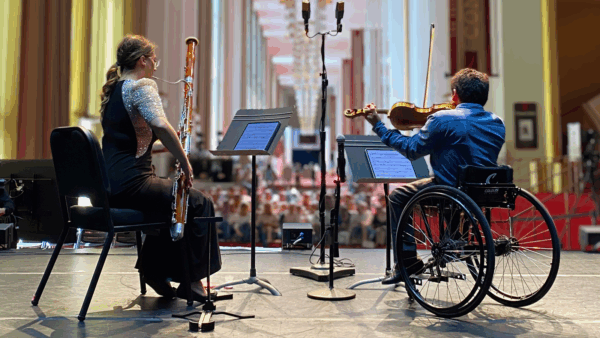
A new report by leading young people’s music charity, Youth Music, finds that disabled young people face disproportionate barriers when accessing the arts, creative education and employment. The report outlines the barriers faced by disabled young people and recommendations for how to break them down.

Now, the launch of the report, Excluded by Design, is accompanied by the announcement of a new £2.25 million one-off, ringfenced fund, Shift the Scene, to equalise access. Shift the Scene is designed to improve access to the arts and creative education for disabled children and young people. The launch is accompanied by calls from public figures about the urgent need to break down barriers to the arts for disabled young people.
George Webster, Bafta award winning CBeebies presenter and disability advocate, has supported the campaign, saying: “There aren’t many opportunities in music for young people with disabilities, and this needs to change. Music is a way of having voices heard. Young people with a disability need to be heard, too. Music will give them an amazing opportunity to stand up for themselves and for them to change the world’s old-fashioned views and perspectives on disability.”
Alongside the fund, Youth Music has published a report, Excluded by Design, which exposes the systemic barriers Disabled young people face when accessing the arts.
Youth Music CEO, Matt Griffiths, says: “We must conclude from this research that the arts sector is failing Disabled young people. There are some brilliant people and organisations out there offering Disabled people creative opportunities, but the research tells us they’re the exception, not the norm. The proportion of Disabled people in the arts workforce is increasing, but remains woefully low.
The barriers Disabled young people and adults face in accessing the creative arts, and building sustainable careers, are not inevitable. We can all bring more equity into the way we work. That means giving extra support to those who need it the most. We’ve ringfenced £2.25million into our new fund, Shift the Scene, to provide long-term opportunities to Disabled young people and give a real boost to this area of work. We urge others to read the report, and think about the part they can play to help equalise creative outcomes”.

Youth Music already invests £1.5 million per year into music projects for disabled children, young people, and adults. However, the charity has committed to providing additional support following concerning findings in the report that disabled young people:
- Participate less in the arts than their non-Disabled peers.
- Have shorter term engagement.
- Are less likely to be involved in community-based activity outside of the home, and are more likely to think there are not enough clubs and activities in their local area.
- Are far less likely to be employed in the arts.
Disabled young people frequently encounter limited access to arts education, fear of judgement, and low expectations. Despite their rights being enshrined in law, in practice they’re often not met. The report finds that:
- The UK is an international leader in creative access and inclusion, yet good practice is driven by specialist organisations rather than being ‘the norm’.
- There’s a need for greater understanding of access and inclusion practices, more consistency in approach, and greater use of the social model of disability to remove barriers to engagement.
A lack of disabled people in the arts workforce means there are few role models for young disabled creatives to aspire to, compounding issues of low representation. Just 9% of the workforce of regularly funded arts organisations are disabled, compared with 16% across the whole UK workforce. And key barriers include:
- Low pay: Disabled people earn less while facing higher living costs.
- Precarious freelancer careers: Self-employment offers flexibility but illness can quickly wipe out work and income.
- Benefit barriers: Fear of losing vital support like PIP prevents many from entering or staying in work.
Recent progress in closing the disability employment gap is at risk due to the Government’s planned welfare reforms.
The Youth Music report also offers practical solutions to increase accessibility to the creative arts for disabled young people, such as:
- Accessible access: Access information for participants, artists, staff and audiences should be accessible, easy-to-find, and built in from the start.
- Training and understanding: Sector-wide education on the social model of disability, with lived experience at the centre.
- The development of IDEA cultures in organisations: Inclusion, diversity, equity and access (IDEA) practices should cut across all areas of an organisation’s operations.
- Equitable programme design: Long-term progressive opportunities, with more youth voice and agency, 1:1 mentoring, better representation and clear progression routes. Creative careers options should be introduced at an early stage.
- Advocacy and allyship: Individuals challenging discrimination, asking questions and using their platforms for change.
The fund will open for applications on 31st October 2025, with a deadline of 28th November 2025. Successful applicants will be notified by 27th March 2026.
For more information, organisations can visit: https://www.youthmusic.org.uk/excluded-by-design