

























How to Layer Garden Lighting with Spike Lights, Bollards and Decking Lights

Good garden lighting is rarely about making every corner bright. In most outdoor spaces, the best results come from layers: a little light to help people move around, a softer glow around seating areas, and a few carefully placed fittings that bring trees, walls or planting into focus after dark.
That is where garden spike lights, bollard lights and LED decking lights each have a role to play. They all sit low in the garden, but they do very different jobs. Spike lights are useful for highlighting plants and features. Bollards help mark routes and edges. Decking lights give subtle guidance around steps, platforms and seating zones.
Used well, they can make a garden feel safer, calmer and more finished without turning it into something overly lit.
Quick answer: Which garden light does what?
Garden spike lights, LED bollard lights, and LED decking lights are not interchangeable. The best choice depends on whether you want to highlight something, guide movement or add low-level detail.
| Lighting type | Best for | What to watch |
| Garden spike lights | Planting, trees, borders and feature walls | Aim carefully so the light does not glare |
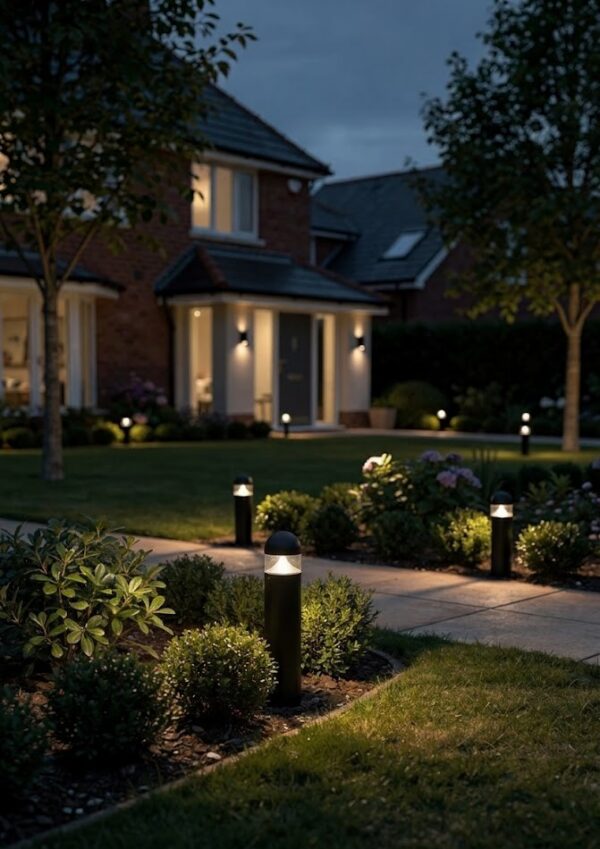
| LED bollard light | Paths, driveways and garden edges | Space them evenly without creating a runway effect |
| LED decking lights | Steps, deck edges and seating zones | Keep the output soft and low-level |
If you are planning from scratch, choose the role first and the fitting second. That simple shift usually leads to a cleaner, more comfortable scheme.
Garden spike lights: best for plants, texture and focal points
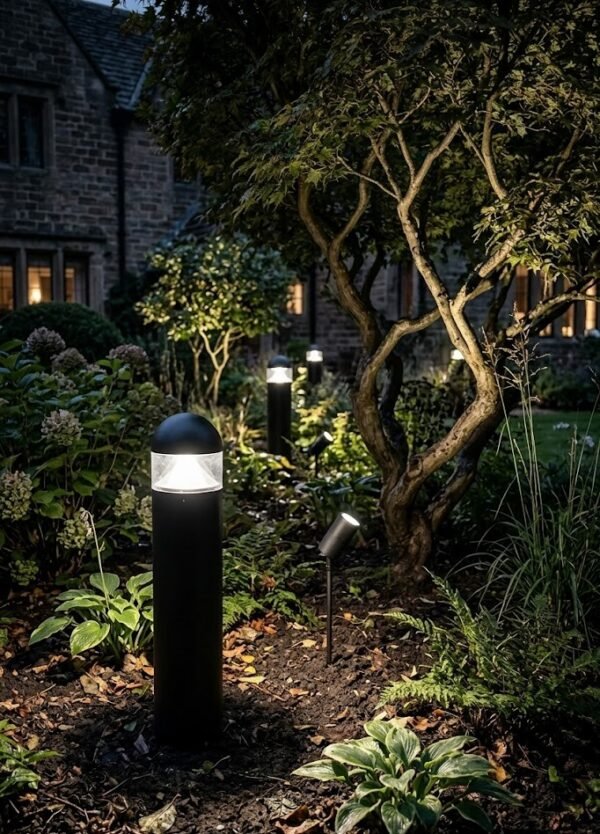
Garden spike lights are flexible because they can often be re-aimed more easily than fixed ground lights, and repositioned where the installation allows. They work well for highlighting trees, shrubs, textured walls and border edges, especially when tucked into planting and angled across a surface or up through foliage rather than aimed at eye level.


LED bollard lights: best for paths and structure
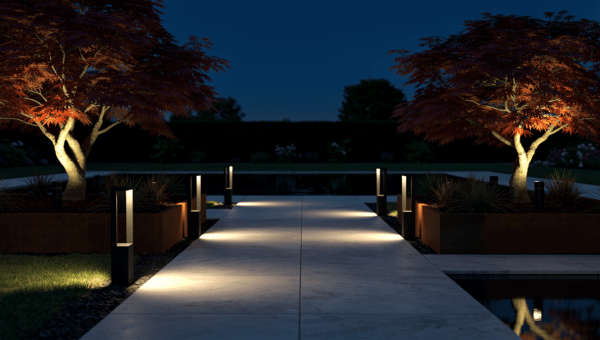
A LED bollard light is usually best for route guidance along paths, driveways, entrances and garden edges. Spacing matters: too many can feel overly formal, while too few can leave dark gaps. Because bollards are visible during the day, choose a style that suits the garden, from slim and modern to more traditional.
LED decking lights: best for steps, edges and seating areas
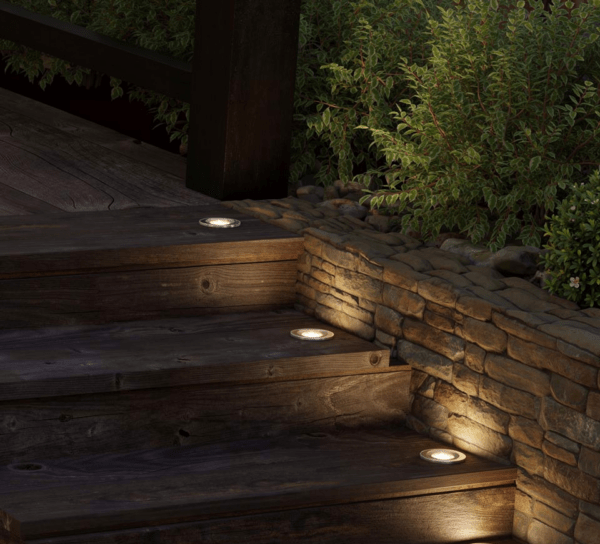
Outdoor-rated LED decking lights are best used for subtle guidance around deck edges, steps, raised platforms and seating areas. Because they sit close to the surface, they should stay soft and low-level; too much brightness or repetition can quickly become distracting. Used carefully, they can define zones without needing a large overhead light.
How to layer the three types together
The most natural-looking garden schemes often combine more than one type of low-level lighting. A simple way to plan it is to think in three layers.
| Layer | Best fitting | Purpose |
| Feature layer | Garden spike lights | Highlight planting, trees or textured walls |
| Route layer | LED bollard lights | Guide paths, driveways and movement |
| Detail layer | LED decking lights | Mark steps, edges and seating zones |
You do not need all three in every garden. A small courtyard might only need spike lights and discreet deck lighting. A longer path may benefit from bollards and one or two feature lights near planting. A raised deck may need low-level edge lighting before anything else.
The best schemes also leave some darkness in place. Shadows are part of what makes outdoor lighting feel atmospheric.
For readers comparing different ground-level fittings, an exterior ground and floor lighting range can be a useful way to see spike lights, bollards, decking lights and walkover lights side by side.
Warmth, glare and placement matter more than brightness
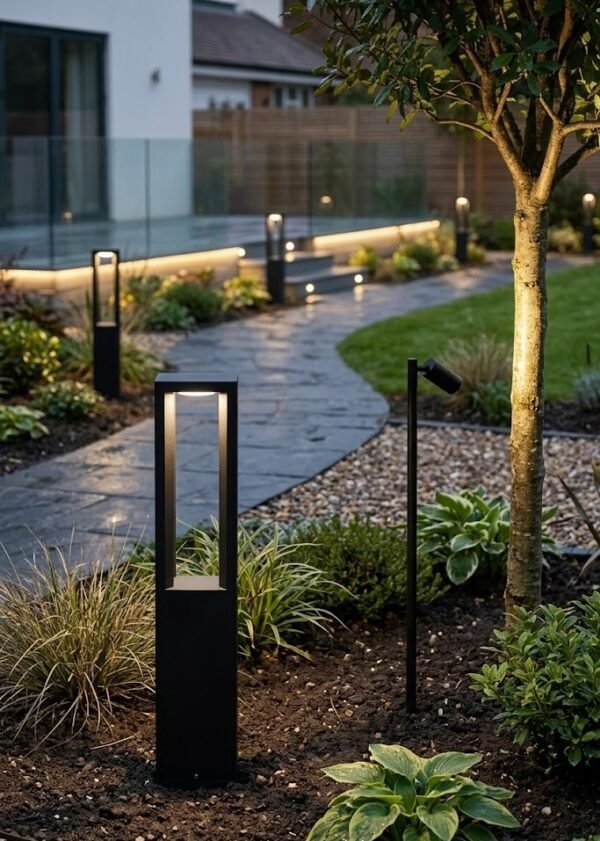
When outdoor lighting feels wrong, the issue is usually brightness, colour temperature or placement rather than the fitting itself. Warm white is often the safest choice for residential gardens, while cooler light is better kept to practical routes.
If the light source is clearly visible from a patio, window or path, the fitting may need moving, angling or softening.
Choosing fittings for the right part of the garden
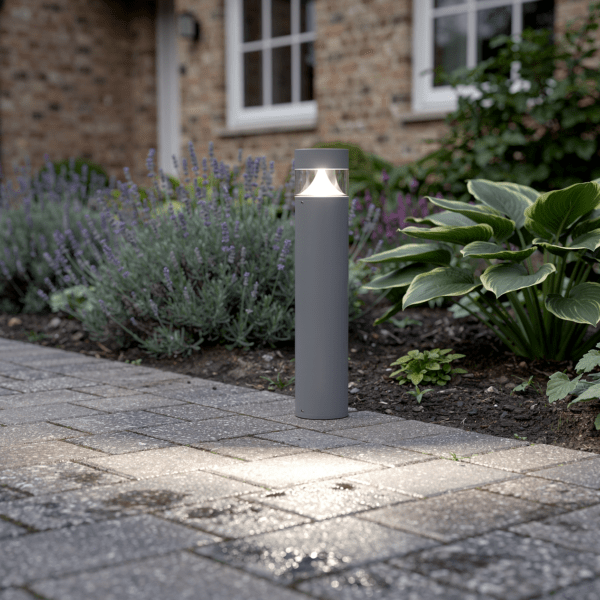
Before buying, walk around the garden at dusk and decide what actually needs light. The answer is usually fewer areas than you think.
Use spike lights where a plant, tree or wall deserves attention. Use bollards where people need to move through the space. Use decking lights where a change in level, edge or seating area needs gentle definition.
Garden Lighting FAQs
Are garden spike lights better than bollard lights?
Not better, just different. Spike lights are best for highlighting features, while bollard lights are better for marking routes, paths and edges.
Where should LED decking lights be placed?
They usually work best around steps, deck edges, seating areas and changes in level. Keep them low and subtle so they guide movement without becoming distracting.
Do I need warm or cool outdoor lighting?
Warm white is usually better for patios, planting and seating areas. Cooler light can work for side paths or practical areas where visibility matters more than atmosphere.
Can I mix spike lights, bollards and decking lights?
Yes. Mixing them often creates a better result, as long as each fitting has a clear role and the garden is not overlit.
Final thought
Garden lighting works best when it feels planned but not obvious. Spike lights, bollards and decking lights can all help, but each one needs a clear purpose.
Start with what you want the garden to do after dark: highlight a feature, guide a route, or make a seating area feel more settled. Once that is clear, choosing the right fitting becomes much easier.