


























Rigid Lateness Policies Under Fire as Reddit Post Goes Viral

A Reddit post recently went viral, gaining over 4,000 likes and more than 200 comments, after a user shared their frustration about being punished at work under a strict “ding” system for lateness.
Whether someone was 15 minutes late or missed an entire eight-hour shift, the penalty was exactly the same. The poster explained that when their car broke down and they realised they’d be late, it would count as a full-day absence- leaving them questioning whether there was any point in going in at all.
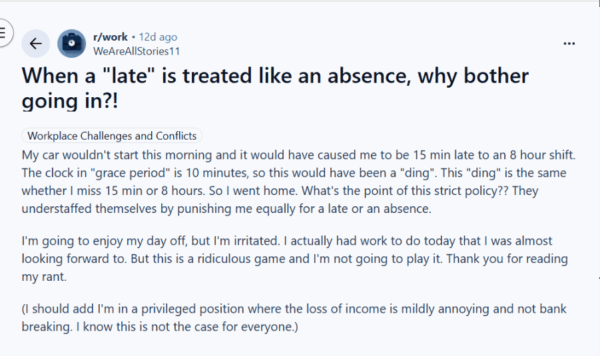
Read the full post on Reddit here.
Many commenters agreed that the system was unfair. One person wrote: “I had a job like this. It was a points system. You got a point if you were late, and you got a point if you called in sick. So anytime someone was running late, they’d just call out for the whole day because… why not? They eventually realised how flawed it was and changed the system.”
With the busiest time of the year approaching, and sickness leave typically at its highest, this kind of rigid policy is something most businesses simply can’t afford.
Ben Wright, Global Head of Partnerships at Instant Offices shares his thoughts on whether employers should be more flexible when it comes to lateness, and how businesses can have fair policies in place for the unpredictable- like a sudden car breakdown.


“Lateness can be caused by many factors, anything from your alarm not going off to completely unavoidable situations like train cancellations, traffic accidents, or a sudden family emergency.
This is why a more flexible, yet monitored, approach to lateness not only supports employees better but also helps employers distinguish between those taking advantage and those who genuinely couldn’t avoid being late.”
We spoke with Ben to introduce some adjustments to policies which could include:
- Allowing employees to make up the time
If someone is late due to circumstances outside their control, giving them options can make the situation far fairer. This could mean staying a bit later, taking a shorter lunch break, or making up the time on another day, i.e. for example, adding an extra hour later in the week.
- Logging context, not just the time
Context helps build a clear picture of an employee’s lateness, showing whether there’s an ongoing issue or just the occasional one-off. Documentation may or may not be necessary depending on the reason and how often lateness occurs, but having some context allows for much fairer and more informed decisions.
- Having a transparent, compassionate reporting process in place
When employees know exactly how to report unexpected delays, whether it’s a quick message, a dedicated app, or a simple phone call – it removes uncertainty and helps them feel trusted rather than scrutinised.
Ben also goes on to explain how workplace culture and environment influence how these policies are received and adhered to: “Fostering and positive and open working environment plays a huge role in how confident and willing employees feel when it comes to speaking up – whether they’re running late, struggling with workload, or dealing with something more personal. When people know they won’t be judged, dismissed, or punished unfairly, they’re far more likely to communicate honestly.”