
























Why Women Are Done With Dating Apps (And What They’re Actually Looking For Instead)

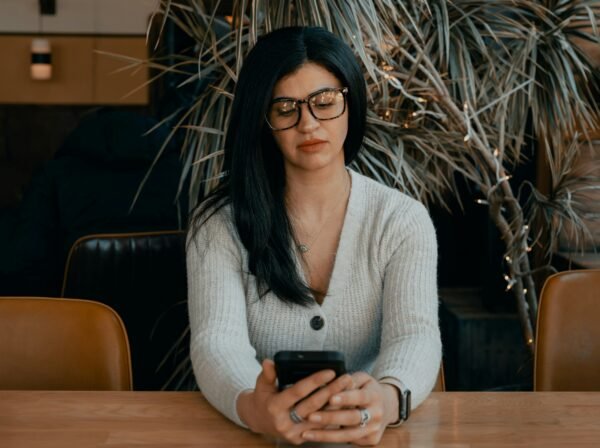
Dating app burnout isn’t a vibe. It’s a documented phenomenon, and the numbers are striking. Usage across major UK platforms has fallen 16% since 2024, according to Ofcom data. In the UK alone, 1.4 million people left dating apps between 2023 and 2024. And it’s not just anecdotal. A Forbes Health study found that 78% of respondents reported experiencing dating app burnout, with the figure rising to 79% among Gen Z and millennials, and 80% of women reporting some level of exhaustion.
If you’ve felt it, you’re in very large company.
The Design Problem Nobody Talks About
The apps weren’t built around what women actually want from a relationship. They were built around engagement. More swipes, more matches, more time in the app. What that produces, predictably, is volume without depth, and a set of defaults that push users toward rapid visual judgment rather than anything that resembles genuine compatibility.
The biggest driver of burnout, reported by 40% of respondents in the Forbes Health study, was the inability to find a good connection on the apps. Not the swiping itself. Not the interface. The fundamental failure to connect with someone real in a meaningful way.
Then there’s the trust problem. Fears around chatfishing and AI-generated profiles are actively undermining confidence in online dating, and with good reason. 7,660 romance fraud cases were reported in England and Wales last year. When you factor in the emotional labour of figuring out whether the person you’re talking to actually exists, the whole exercise starts to feel less like dating and more like a security audit.
Where Women Are Going Instead
In-person alternatives like speed dating, singles events, and workplace connections are seeing renewed interest as women step back from the apps entirely. According to a 2025 Pew Research study, couples who meet through friends are 30% more likely to stay together. The logic isn’t hard to follow. Meeting someone through an existing social circle means built-in context, shared connections, and a baseline of trust that no app algorithm can manufacture.


For others, the move isn’t away from digital dating altogether but toward platforms that were actually built with them in mind. 60% of singles agree that unique, interesting hobbies are the best basis for forming a relationship, which goes some way to explaining the growth of niche, values-based platforms over general-purpose ones.
One example of this is SALT, a Christian dating app built and run by a small Christian team. SALT is the product of a passion project by founder Paul Rider who was fed up with dating app culture and wanted to build something that was designed around what its users actually care about rather than just around retention metrics. Rather than leading with photos and proximity, it uses values-based filtering and profile badges so that what someone believes is visible from the start. Users send an intro message before a match is even confirmed, which immediately changes the quality of first contact. It’s available in 50 countries across 20 languages with millions of users worldwide, most of them in the 25 to 35 age range. There’s in-app video calling and voice notes for building real familiarity before meeting, and the whole platform is backed by human moderation, selfie verification, and fraud detection. For women who’ve felt unsettled by the anything-goes atmosphere of mainstream apps, that infrastructure matters. It’s built for authentic, faith-driven connection, and the people who’ve found each other through it include couples who met across different continents through shared belief rather than shared geography.
The Bigger Picture
The era of high-speed, algorithm-powered interactions is giving way to a more intentional, niche-focused movement driven by consumer demand for authenticity, community, and trust. That’s not a niche observation. It’s a market shift.
The apps that are growing right now are the ones that understood this early. The ones still optimising for engagement over connection are losing 1.4 million UK users and counting. Women didn’t get tired of dating. They got tired of platforms that were never built to help them find what they were actually looking for.
That’s a very different problem, and it has a very different solution.