
























50% of All Homeowners Struggle to Style the Hallway – Here’s How to Get it Right

New findings show that for 50% of homeowners, hallways and landings are the biggest problem areas when it comes to decorating. Awkward layout, lack of space and a shortage of design inspiration were the most common reasons people cited for finding these areas difficult to decorate. As a result, Johanna Constantinou, interior trends expert at Tapi Carpets & Floors, shares her best tips for decorating hallways and landings to make the most of what’s often ‘dead space’ in your home.
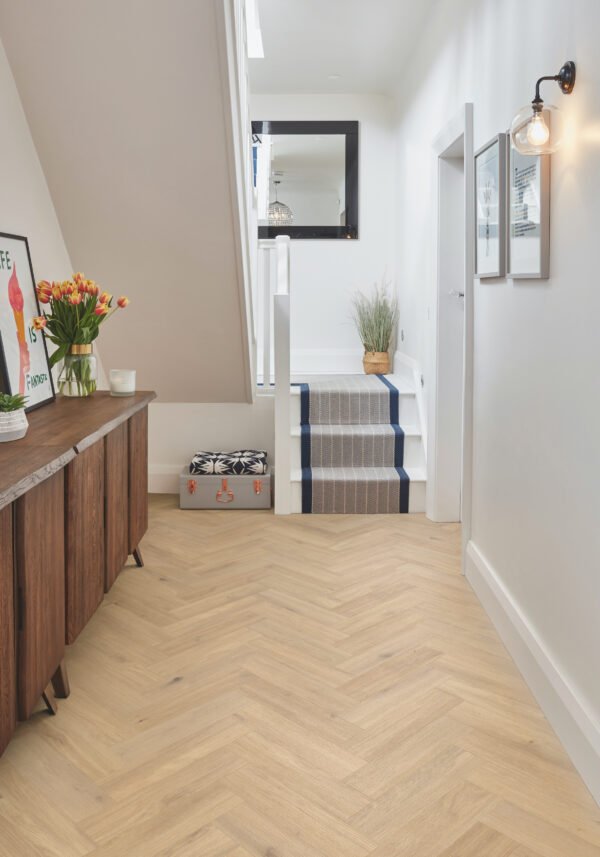
Slimline furniture and mirrors create the illusion of a wider space
Johanna Constantinou says, “Hallways and landings often feel awkward because they’re typically designed as pass-through spaces, but with the right layout and storage choices, they can become an impactful area of the home. Hallways are the entrance to a home; clever design is your first impression.”
Johanna says that a great trick for creating the illusion of increased space in transitional areas is slimline furniture or wall-mounted decorations, like framed pictures and artwork. Mirrors visually widen narrow hallways because they reflect light across the space.
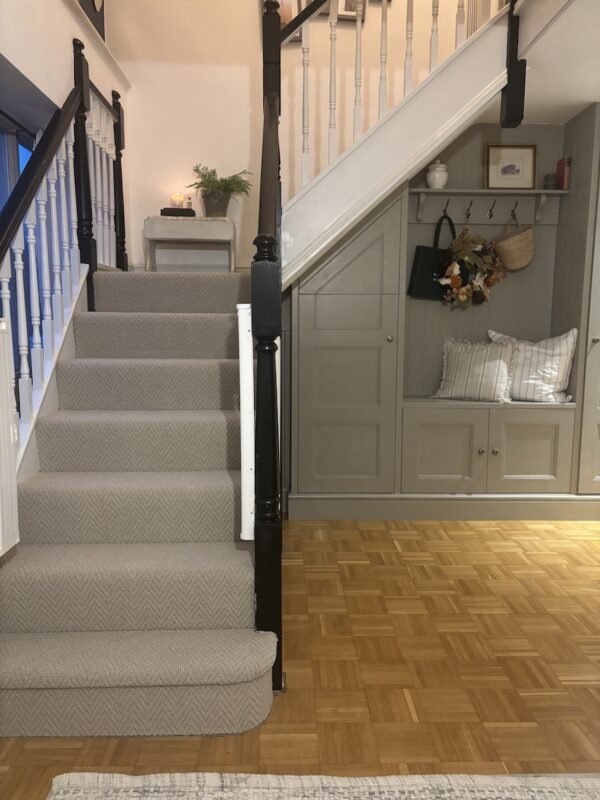
Understairs storage makes use of otherwise dead hallway space
“Built-in cupboards and understairs storage will maximise unused space” says Johanna. “As will wall hooks and narrow shelving for coats, bags and keys. Storage benches can be a nice touch that double as seating without taking up too much space, a perfect spot to tie your shoelaces.”
Purposeful design will split up the space
“On a landing, try designating a small corner with a defined purpose that will help the space feel intentional. A reading corner, for example, can be achieved by positioning minimal furniture in the space, like a cocoon chair. For smaller landings, strategically placing mood lighting and introducing plants, such as faux olive trees, can bring a sense of calm and structure to a usually neglected space.”
Connected flooring with lengthen the space
Johanna tells us, “Flooring plays a big role in how spacious a room feels. Using the same flooring, or colourways throughout connected areas, such as hallways, landings and living spaces, creates visual flow and makes the home feel larger and more cohesive. Pairing neutral warm loop or twist carpets on stairs with a natural oak floor can show intention through design. Laminate is a practical choice for high-traffic areas because it’s durable, easy to clean and maintains a consistent look.”

Small spaces possess untapped added value
Robin Edwards, a buying agent at Curetons Property Finders, says the findings highlight a major opportunity for homeowners thinking about long-term value:
“Buyers love homes that feel well thought-through, where every square foot of space has been maximised and it can certainly increase a property’s overall appeal and its price.
“Dark, cluttered hallways, awkward layouts that waste space or tiny rooms with no clear use can make a home feel smaller and less practical than it really is. Buyers may not always articulate it, but when a home feels badly designed or hard to live in, it often translates into lower offers and less interest overall.”