



























The 5 Household Appliances Quietly Costing You Nearly £800 Per Year

Insights by Tina Loveland, Senior Designer and Smart Home Specialist at Appeal Shading
60% of homes in England, Scotland or Wales are on a standard variable tariff – and that means they will be affected by the 13% Energy Price Cap rise planned for 1 July to 30 September.
In reality, the average customer will now pay £1,862 per year via Direct Debit – yet another cost-of-living issue that the majority cannot ignore. Much advice around saving on your energy bills typically goes back over the same familiar ground: turn the thermostat down, switch off the lights, shop around for a better tariff. It’s all sensible advice – but it misses the appliances that are doing the most damage without ever registering as a problem.
The real drain often comes from things people use without much thought – and without any idea of the annual bill quietly accumulating. Tina Loveland, Senior Designer and Smart Home Specialist at Appeal Shading – the electric blinds experts – has identified the five biggest culprits, using current Ofgem electricity unit rates and typical UK usage data. Together, they could be costing your household more than £500 a year.
1. Your washer-dryer – £212 per year
The washer-dryer is one of the most popular purchases for households short on space – a single machine that does both jobs with half the footprint. The problem is that it costs significantly more to run than most people realise. According to Which?, washer-dryers are the most expensive domestic appliance to run by some margin, with annual running costs reaching up to £212 – more than the average annual running costs of a separate washing machine and condenser tumble dryer added together.
“The washer-dryer is a counterintuitive one because people make the purchase thinking it’s the efficient, practical choice,” says Loveland. “But the drying cycle in a washer-dryer uses water to cool the drum, which is a much less efficient process than a dedicated tumble dryer. Over the course of a year, that inefficiency adds up to a meaningful difference on the bill. For households that have the space for two machines, separating them – particularly by pairing a washing machine with a heat pump tumble dryer – is almost always the cheaper option in the long run.”


2. Your plug-in electric heater – £135 per year
A plug-in heater is often only used occasionally, but even infrequent use can build up significantly in terms of bills. A standard 2kW fan heater running for four hours each evening, across a five-month winter, costs in the region of £135 at current electricity rates (based on the October to December 2025 Ofgem electricity unit rate of 26.35p per kWh). That is a fairly modest usage pattern, and some households will exceed it.
“People tend to think of plug-in heaters as cheap because they’re cheap to buy,” says Loveland. “A £25 fan heater feels like a sensible solution for a cold room. But the running cost is considerable, because these are high-wattage appliances drawing at full power whenever they’re on. And they treat heat loss as a given – they keep pushing warm air into a room without addressing why that room is cold in the first place.
“Improving insulation is often the more effective fix. Draughty windows are one of the most common sources of heat loss in older homes, and fitting insulating blinds can make a noticeable difference to how much supplementary heating a room needs – which means the heater either runs less often or gets put back in the cupboard altogether.”
3. Your home office setup – £182 per year
Since the shift to hybrid working, the home office has become a common feature in millions of UK homes – and a permanent drain on the electricity bill. Analysis by C-Lec Electrical, calculated at current Ofgem rates, puts a typical productivity desktop PC running for eight hours a day at around £182 per year. A full home office setup adds to that figure with each component contributing even more to the final bill.
The desktop PC alone, running at an average draw of 250W for an eight-hour working day, accounts for approximately £182. A 27-inch monitor adds a further £18–£22 per year for each screen in use, and peripherals and USB hubs left running permanently contribute another £10–£15 on top.
“The home office setup is a common hidden cost,” says Loveland. “People compare a desktop to a laptop and assume the costs are similar, but they’re really not. A desktop draws two to three times the power of a laptop, doing exactly the same tasks – add a second monitor and a router that never gets switched off, and the figure mounts quickly. The simplest fix is also the most overlooked: switching everything off at the wall at the end of the working day rather than leaving it all on standby.”
4. Your games console – £61 per year
Modern consoles are significantly more power-hungry than their predecessors, particularly when left on standby rather than fully powered down. Research by Business Energy UK, published in April 2025, found that the Xbox Series X costs around £60.82 per year to run for three hours of daily use at UK electricity rates, with the PS5 close behind. That figure does not account for the console being left in enhanced rest mode, which is how it spends the majority of its time in most households.
“A lot of households have a console that’s never fully off,” says Loveland. “It sits in rest mode overnight, downloading updates, charging controllers, ready to turn on instantly. That low-level draw adds up across the year without anyone noticing. Switching to a lower power sleep mode, or turning it off at the wall when it won’t be used for a few days, costs nothing and makes a measurable difference to the annual bill.”
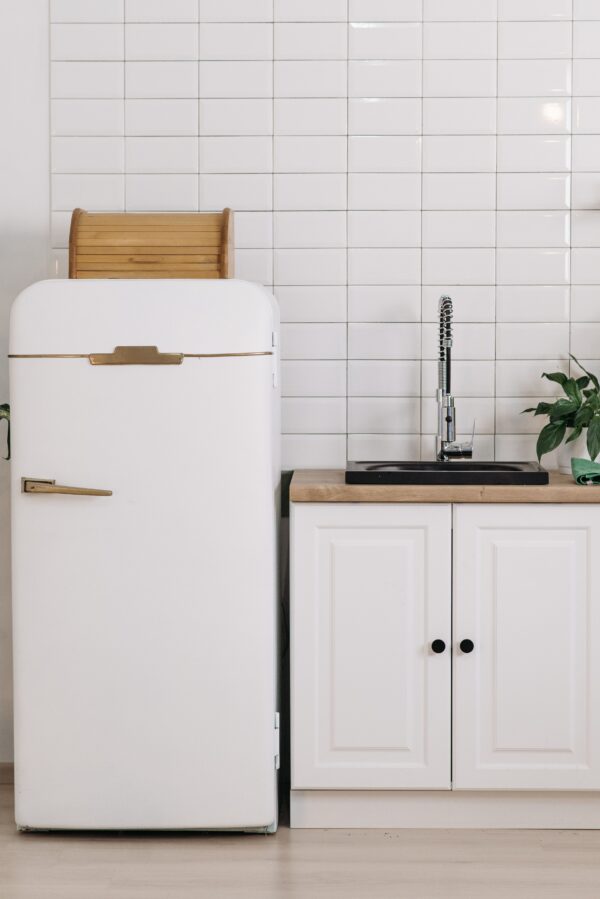
5. Your ageing fridge-freezer – £200 per year
The fridge-freezer runs 24 hours a day, every day of the year, which means its efficiency rating has a far greater impact on annual costs than most people appreciate. A modern A-rated model costs around £46–£60 per year to run.
However, according to Saga, an outdated model from the mid-1990s can easily consume over 1,000 kWh per year – translating to more than £200 annually at current electricity rates. Even appliances sold before the 2021 energy label changes, which now sit in the D–F range under the updated rating system, can use 400–500 kWh per year – roughly double what a modern replacement would draw.
“The fridge-freezer is the one appliance nobody ever thinks to question,” says Loveland. “It’s always been there, it’s always been on, and because it doesn’t make much noise most of the time, it doesn’t feel like it’s costing anything. But if yours is more than 10 years old, there’s a good chance it’s one of the most expensive things running in your home. Checking the energy label – or using a plug-in energy monitor to measure actual usage – takes minutes and can reveal a surprisingly large number.
“Not to mention, if you have a second fridge or freezer sitting in the garage that’s rarely used – an old model kept on out of habit rather than necessity – that can easily add a further £80–£100 to your annual bill on top of everything else.”
“The appliances with the highest running costs are often the ones that feel most normal to have on,” says Loveland. “Because they’ve always been part of the routine, nobody questions them. That’s exactly where the real savings tend to be hiding.”
Written by Millie Bradbury
